
August 2026
"Paying Forward": The Spirit that Drives Liberal Arts Education--ICU's Harmonious Relationship with Donations
Since its founding in 1953, the International Christian University (ICU) has been sustained by the voluntary donations of many benefactors. With a culture that is extremely rare in Japan, ICU fosters the spirit of "paying forward," or passing on the benefits of the education one has received to the next generation in the form of donations. This stems from liberal arts education and the value it places on the individuality of each and every student by committing to maintain small class sizes.
Arc Communications assisted in revamping the website that serves as ICU's donation platform. This time, we discussed the significance of donations and how they have their roots in the spirit of the university's founding; the source of ICU's deep engagement with alumni; and the future of information dissemination brought about by the newly updated website with its improved capacity for effective communication.
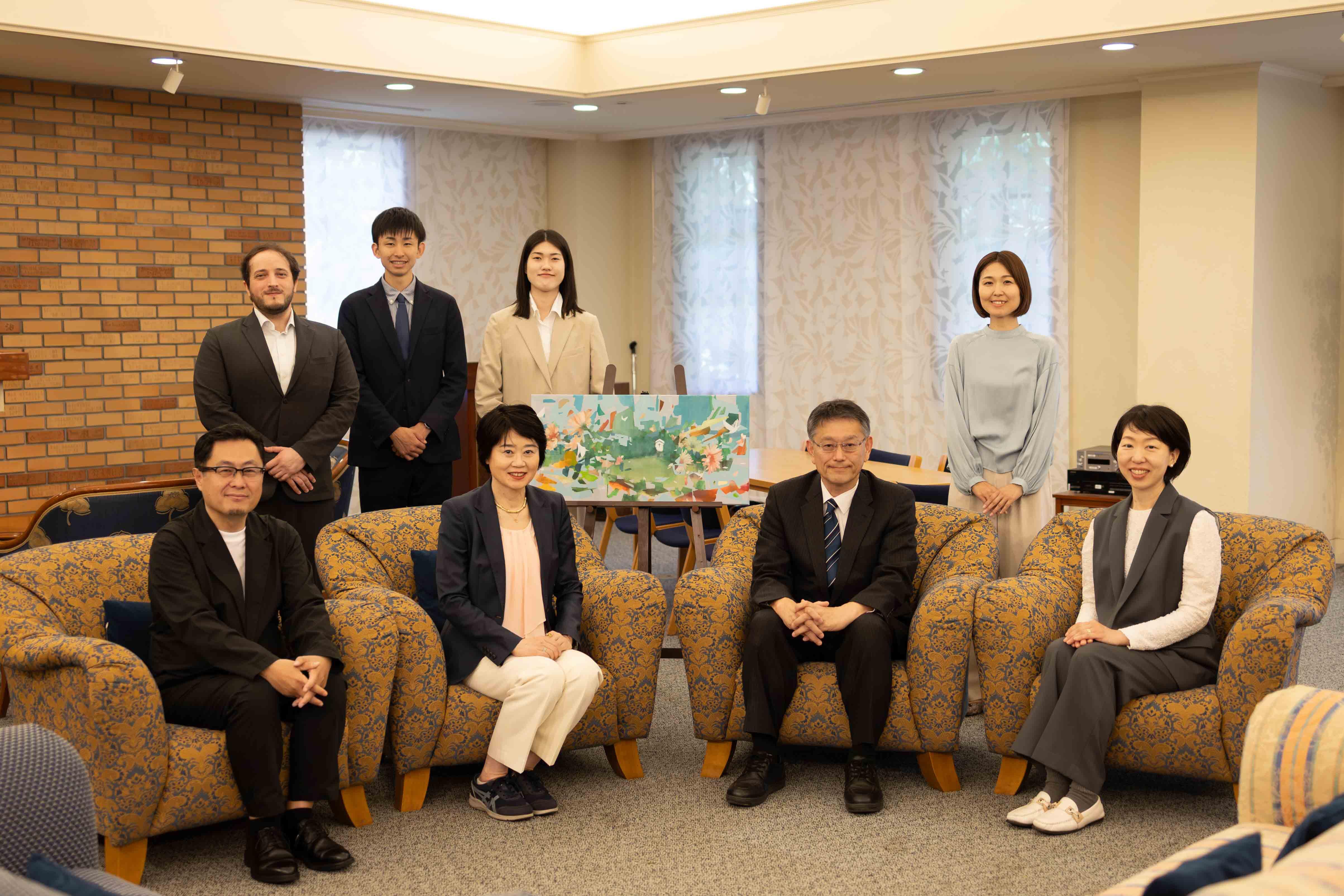
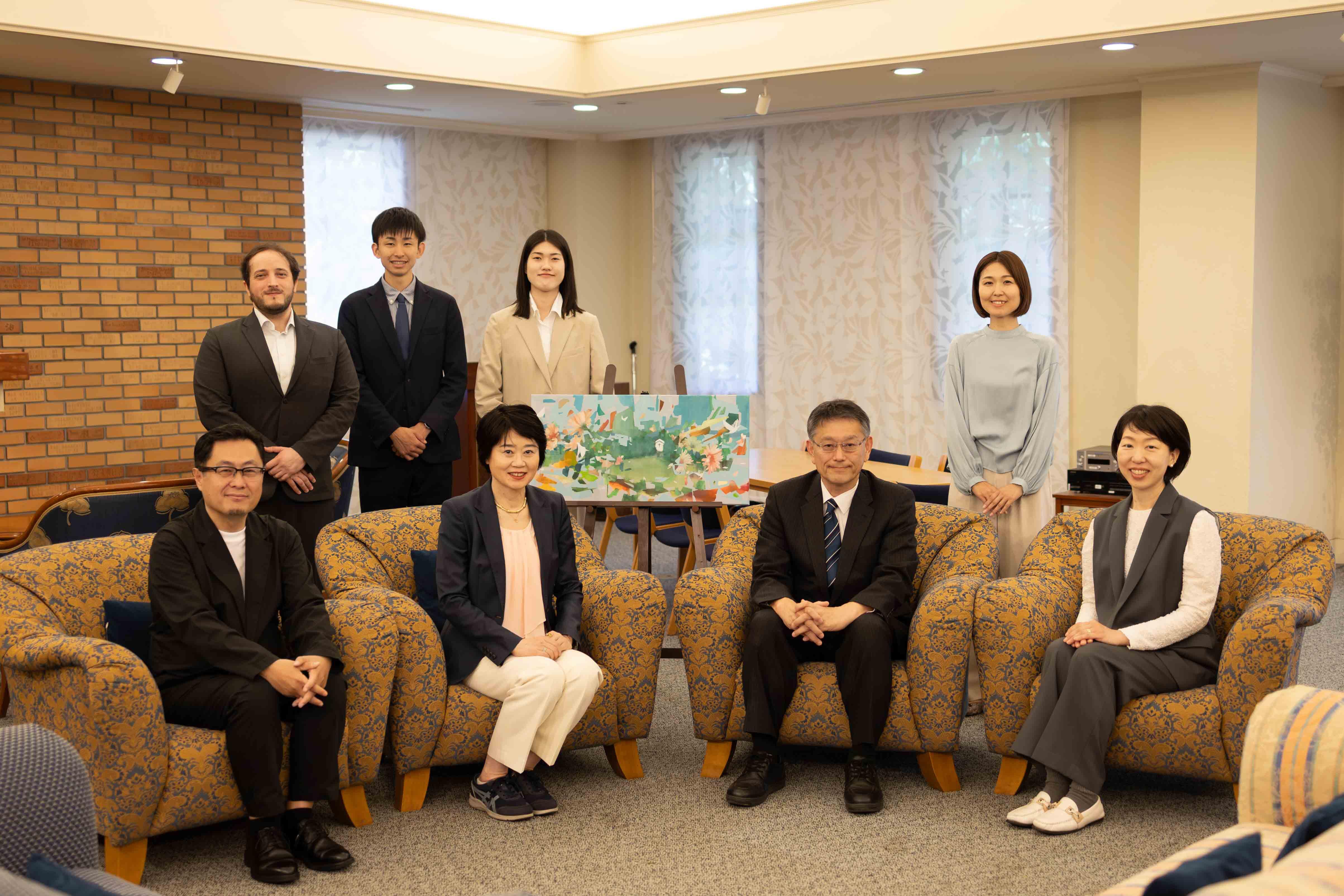
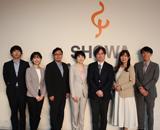
From left to right: Yoshihiro Sato, Daniel Fieschi, Hiroki Komaki, Mariko Ohsato, Jaeseo Lee, Masashi Kuramoto, Sakiko Sato and Sonoko Morikawa
- Profile
- International Christian University (ICU)
- Masashi Kuramoto: Trustee in Charge of Special Affairs (Fundraising)
- Sonoko Morikawa: Manager, Public Affairs and Communications Division
- Sakiko Sato: Advancement Office, Public Affairs and Communications Division
- Arc Communications Inc.
- Mariko Ohsato: CEO & President
- Yoshihiro Sato: Director & Web & Cross Media Executive Manager
- Daniel Fieschi: Sales, Web & Cross Media
- Hiroki Komaki: Director, Web & Cross Media
- Jaeseo Lee: Director, Web & Cross Media
A University Founded through Donations and the Spirit of Liberal Arts at its Origin
Sato (Arc): To begin, please tell us about the origin of donations at ICU and the unique significance they hold compared to other universities.
Kuramoto: ICU is truly a university that was born from and has been supported by donations. It was founded during a difficult era when post-World War II reconstruction had only just begun, but we were able to open the university with the support of members of Christian organizations in Japan and overseas, as well as from Japanese and American citizens who wished for peace. For example, the land where the current Mitaka campus is located was purchased through valuable donations from numerous citizens and companies that supported the university's mission. For some time after the university opened, donations from foundations in the United States and the support of many volunteers helped sustain our operations.
Sato (Arc): So, from the moment of its founding to the present day, donations have remained an essential pillar for the university's continuation and development.
Kuramoto: That is correct. The small-group liberal arts education that our university maintains, and the lush, expansive campus that fosters it, are essential elements for upholding our high educational standards. To protect this wonderful educational environment and pass it on to the next generation, the generous donations we receive from everyone on an ongoing basis serve as an important source of funding. As such, at our university, donations are not a thing of the past but an ongoing management pillar, and deep respect for donors is engrained in the shared culture of both the university and its alumni.
Sato (Arc): What are your thoughts on the current trends and environmental changes surrounding donations to higher education institutions in Japan?
Kuramoto: Many universities have begun to focus on fundraising projects, and there are several structural changes that factor into this. The first is the decline in the number of students due to the falling birthrate and aging population, which makes the conventional management approach based on scale expansion difficult. The second is anxiety about the financial future of higher education as a whole, including national and public universities, such as the reduction of government subsidies. The third is the prolonged inflation, including electricity and labor costs. Diversification of revenue sources for the stabilization of university management can now be said to have become an important theme for every university.
Sato (Arc): And ICU also needs to respond to such environmental changes?
Kuramoto: Exactly. However, it's important to take an approach rooted in the essence of our university, rather than simply imitating the methods used by other schools. In the United States, there is a concept called the "Alumni Giving Cycle." It's a cycle in which a university offers high-quality education to its students, then provides a mechanism through which graduates (alumni) who have benefited from it can continue to feel engagement (a connection) with the university after graduating. They can give back to the university in the form of donations for the next generation after achieving their own success in society. We intend to further strengthen this cycle, which our university has traditionally possessed, in the future. In that sense, the purpose of this project was to use the latest Web technology to make this cycle a more robust system.
Deep Engagement Fostered by Education that Recognizes Individuality
Sato (Arc): ICU is known for having an extremely deep engagement (connections) with its graduates. What do you attribute it to?
Kuramoto: There have been changes in each era. Even in the early days shortly after our founding, when society as a whole was still unstable, our university provided thorough liberal arts education while also offering financial support as needed, so that students could immerse themselves in their studies without worrying about the future. Graduates who acquired international knowledge here and entered society hold an extremely strong feeling of gratitude and school spirit, saying, "I am who I am today thanks to ICU."
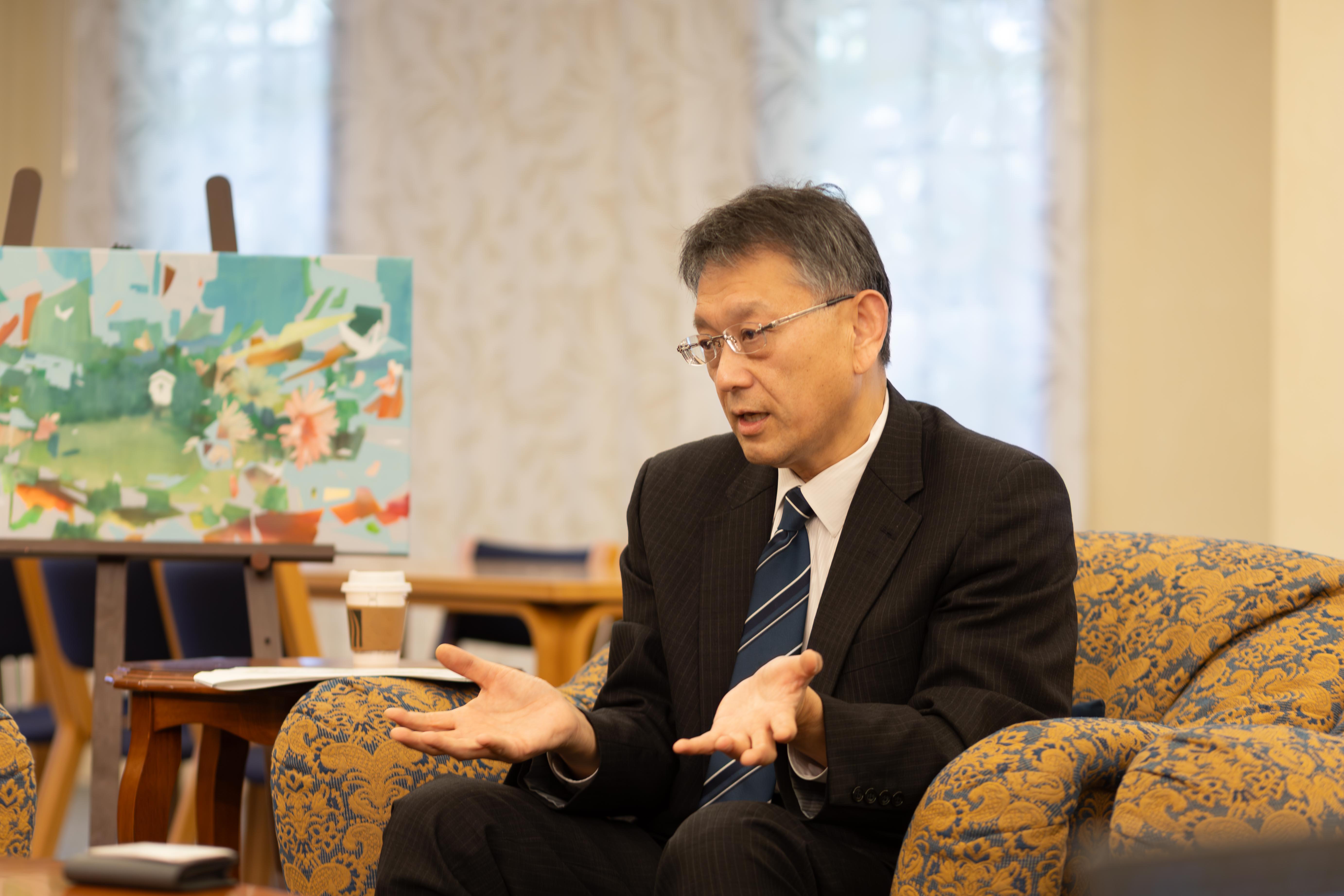
Morikawa: Even now, more than 70 years after the university's founding, despite changes in student diversity and the context of the era, the strength of our graduates' affection for the community remains consistent. At the core of this is an education system where you can see the face of each individual. The memory of being recognized as an irreplaceable individual rather than one of many during their student days leads to a deep sense of trust in the university. I believe that the memories of spending time freely in a campus surrounded by rich nature, the sense of closeness to faculty members, dormitory life as well as a unique community hold a special place in their heart, a 'home' they can return to any time even after graduation.
Sato (Arc): That's a wonderful relationship! On the other hand, were there any concerns about the dilution of connections due to changes in the times?
Kuramoto: Yes, there were concerns. At our university, too, the number of students has increased significantly compared to when we first opened. Along with this, the ways of spending campus life have diversified, and it is true that slight differences are beginning to emerge in the sense of distance students feel toward the university. Students who were deeply committed to extracurricular activities, dormitory life, or their studies at the university continue to have strong engagement, but otherwise, that contact with the university after graduation tends to become less frequent. Therefore, our university is taking proactive action, and we are developing the aforementioned "Alumni Giving Cycle" in a more ample way, one that is tailored to modern lifestyles.
Ohsato (Arc): Specifically, what kind of measures have you implemented?
Morikawa: So far, ICU has tended to rely on the spontaneous school spirit of its graduates and has refrained from taking an active approach from the university side. Basically, except for the special milestones of the 25th and 50th anniversaries of graduation, we left it to the alumni associations that graduates organized voluntarily. Therefore, in recent years, we have evolved into a system where we hold Anniversary Reunions for classes reaching their 10-year milestones after graduation concurrently with the ICU Homecoming event for alumni held once a year. We welcomed graduates' attendance with their families and devised ways to lower the psychological hurdles to attending, which resulted in a significant increase in participants, including the younger generation and those who joined on the day, and we were able to obtain a solid response.
Kuramoto: Maintaining contact information (the database) is also one of our lifelines. In recent years, due to the progress of digitalization and the growing awareness of personal information protection, it has become more difficult to secure contact information, such as tracking changes in email and home addresses. Holding such events is not only a place to renew old friendships, but also a means of developing an important infrastructure to revive contact lines with alumni and enable relevant information dissemination from the university.
Removing Barriers to Donation through the Power of the Web, Balancing Emotion and Functionality
Sato (Arc): What was your primary motivation for deciding to overhaul the bespoke donation website this time?
Kuramoto: The biggest challenge lied in usability. The old site had various pieces of information intricately intertwined, and even our team, who created it, had trouble finding the pages we were looking for. This would discourage visitors who accessed the site with the intention of making a donation. A fundamental review of the user experience (UX) to prevent lost opportunities was the background to this decision.
Sato (Arc): In our preliminary analysis, we found that ICU's donation structure is characterized by a limited total number of donors compared to large universities, but a very high donation amount per person. Consequently, in this design, we focused on an approach that lowers psychological and technical hurdles for light donors who weren't familiar with donations until now, by allowing them to participate in small amounts and complete the procedure with one click, while also ensuring convenience for the existing core donor base.
Sakiko Sato: Since Arc had originally been involved in the production of our university's official website, we felt a sense of security knowing that you deeply understood our culture. In addition, I was impressed by your enthusiasm, as you researched cutting-edge examples of donation sites at top overseas universities in advance and incorporated them into your proposal. In particular, the implementation of an auxiliary form that intuitively supports donation decision-making is an advanced attempt for a Japanese university site, and I am very happy that we were able to take on the challenge of creating something new together in this way.

Morikawa: The bilingual environment is part of the fabric at ICU. So, the fact that we could confidently entrust Arc, who also possess high expertise as a translation company, with sharing information in native-quality English and the conforming with our university's ethos, was also a major factor in our selection.
Komaki (Arc): Thank you very much for your kind comments. Regarding the text within the site, we also paid close attention to using simple expressions that exclude technical jargon and to maintaining a consistent tone and manner throughout the entire site.
Lee (Arc): We worked alongside you in your daily operations, being mindful of creating visually easy-to-understand manuals and providing careful lectures so that university staff members without specialized Web knowledge could operate the site with ease.
Sato (Arc): We also focused on creating a flow that allows site visitors to naturally select a route based on their interests and background (alumni, parents, general public, etc.). We have carefully designed the site with a psychological gradation in mind, so that even visitors who aren't specifically considering a donation yet can feel empathy through browsing the information and think, "I can contribute here, too."
The Visual Rendering of Results Accelerates Empathy-based Giving as an Investment
Ohsato (Arc): The endowment-type donation adopted by ICU (a mechanism that maintains the principal and utilizes the investment returns) is a very advanced model for a Japanese university and holds high value for donors as a lasting investment in the next generation. I believe that providing precise feedback on what kind of student growth or results the money one has invested has led to is the key to strengthening future engagement.
Kuramoto: As you pointed out, information dissemination has been a long-standing challenge for us. Perhaps we had a culture of being somewhat "reserved" and refraining from self-promotion (laughs). Moving forward, we will strive to actively show the specific achievements and research content of students who have studied with the help of scholarships in a more visually appealing manner. Furthermore, ICU has a Pay Forward Fund based on the concept of "passing on the benefits one has received as a scholarship to the next generation." Donations for scholarships are added to the fund, and the investment returns are then distributed as scholarships. This ensures that the donations received will continue to support scholarship students permanently. I believe we should also more strongly communicate through the site the existence of this mechanism, which expresses the warmth of human hearts in "paying it forward."
Ohsato (Arc): The strength of ICU lies in the very existence of this overwhelmingly high-quality community. Empathy-based giving, which calls on people to invest in the future together as a member of this valuable community, becomes a strength that transcends the amount of the donations themselves. I believe that in the future, highlighting indicators that show the expansion of engagement, such as trends in donation rates and the number of participants, rather than just the total donation amounts, will be more likely to resonate with business professionals.
Morikawa: The tagline "MAKE A GIFT, MAKE A CHANGE." proposed by Arc this time truly embodies that philosophy. The message that each individual's action, regardless of the monetary amount, brings about change in the university and, by extension, society, is extremely valuable. I believe it will be particularly important to visualize and report the results of the changes brought about through the website in the future.
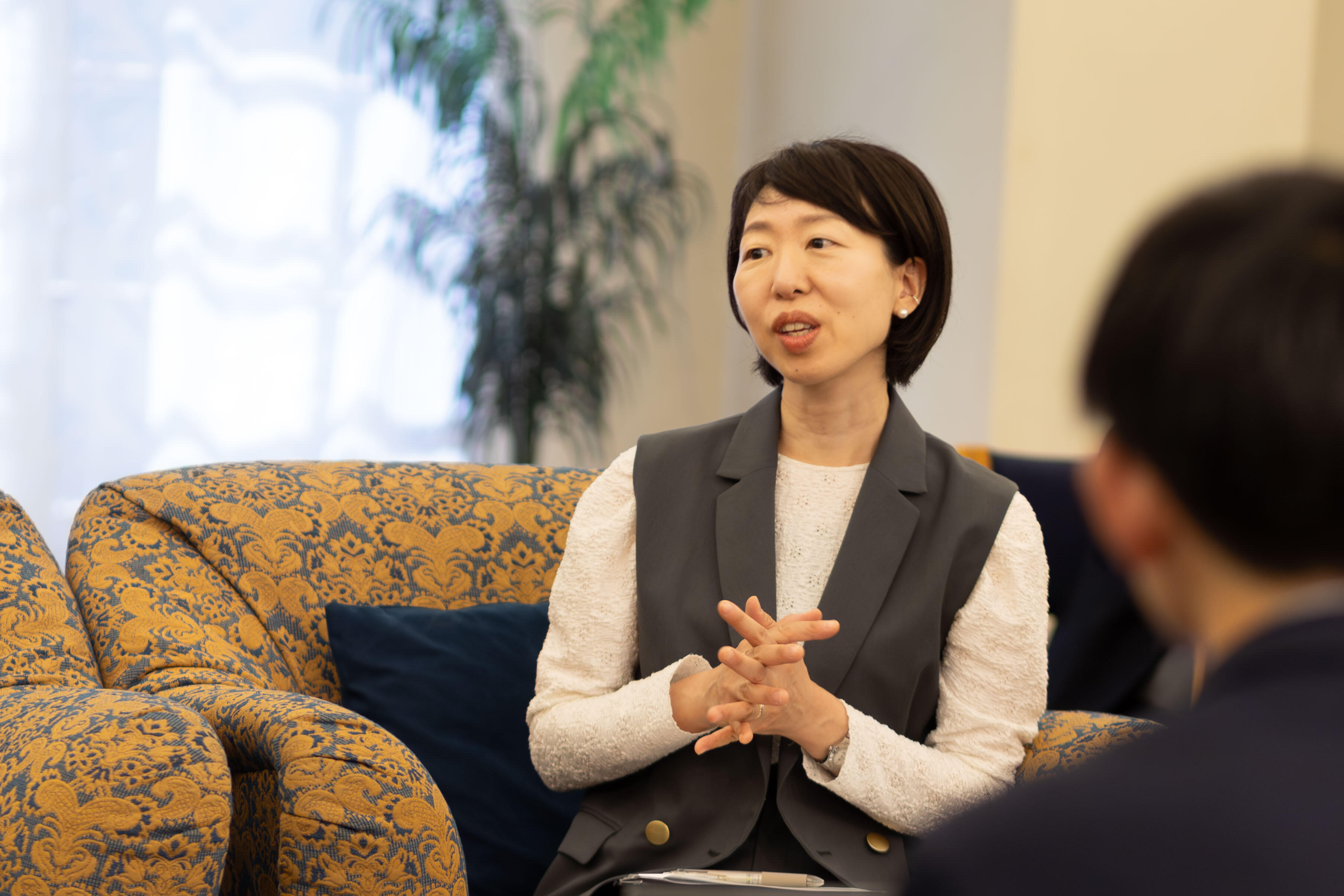
Completion of the Platform and Moving onto the Second Stage of Proactive Information Dissemination to Convey Content
Sato (Arc): Now that a new platform has been built, what are your thoughts on future prospects?
Kuramoto: With the website that Arc has built for us this time, a solid platform has been established for us. How we breathe life into this and utilize it--the efforts in operation from here on out--will be what is truly important. We would like to evolve the site, which has previously had a strong passive positioning of accepting donations, into an engaging medium that actively requests donations from the university to alumni through information dissemination.
Morikawa: As the website has just been revamped, we will first thoroughly look into the reactions of the users. I feel that this renewal has resulted in a site that conveys the level of enthusiasm for donations and is filled with passion. We would like to maintain this level of enthusiasm and expand it further in the future.
Daniel (Arc): Other than designing websites, at Arc Communications we're also experts at cross-media development, ranging from video content to graphic media and pamphlets. We would love to keep helping your university's digital as well as analog strategies for information sharing.
Sakiko Sato: As someone responsible for the practical work of updating the site, I feel that not only has the ease of use for donors improved, but internal operational efficiency has also increased significantly. Thanks to the detailed manual and the optimization of the CMS (administration screen), we are now able to reflect the latest news and student voices in a timely manner, even without really knowing HTML. We would like to increase the frequency and quality of our information dissemination in the future.
Sato (Arc): Thank you for your valuable insights today. A website isn't something that is finished once it's been built. We will continue to give our best in working alongside ICU and your new challenges.
-------------------------
Need help with a translation or interpreting project? Feel free to contact us here.
Arc Communications(Global site)
アークコミュニケーションズ(Japanese site)

Feature Interview Index